We've been having some hot weather here lately. As I write this, at approximately 3 p.m. on Friday July 22, the temperature is currently 100 degrees in the Joplin area, and this marks the fourth day in a row that the thermometer reading has topped out at 100 degrees or more. The weekly forecast shows the temperature continuing to reach 100 or greater each of the next five days. If that happens, we will have had nine consecutive days with temperatures of 100 or more. Plus we had three days in July prior to the current streak in which we reached at least 100. So, we might have at least twelve days this month of triple digit temperatures. That's hot, but there have been at least a couple of Julys in the Ozarks during my lifetime that were hotter.
One of those years was 1980. The exact figures vary, depending on the source, but according to Weather Underground, Joplin had 19 consecutive days and 22 total days in July of 1980 on which the thermometer reached triple digits. It continued to be hot that summer into August and early September. I was teaching school at the time, and I recall how terribly hot it was during the first few weeks of school in late August and early September. The school I taught at did not have air conditioning at that time, and by afternoon the building was sweltering. The heat was draining on both teachers and students, and by afternoon, it was hard get much teaching and learning done.
July 1954, when I was a little kid, was even hotter than 1980. Although the total number of days (18) and the consecutive number of days (12) of triple digit temperatures during the month were both fewer than in July 1980, the overall average temperature was hotter. That's because the very hot days in July 1954 were more extreme, with several days reaching into the one hundred and teens, and even the "cooler" days were hotter than the cool days of July 1980. Only once or twice during the entire month of July 1954 did the maximum temperature top out at less than 95, whereas there were several such days in July 1980.
So far this July, the average daily high temperature has been 91.29 degrees in Joplin, the average daily low has been 66.44, and the overall average temperature has been 83.77. By comparison, the same figures for July 1980 were 93.86, 77.5, and 88.2, and the figures for July 1954 were 98.2, 81.63, and 89.06. As you can see, even though we are having a hot July this year, the overall average has been considerably lower than either 1980 or 1954, mainly because it has tended to cool off more in the evening this year than it did in either of the other two years. But we still have over a week of this month left, and if the forecast is correct, those average figures for 2022 could rise considerably.
I should probably add that I don't mean to suggest, by pointing out that we have had summers in the past hotter than the current one, that the average global temperature is not rising. The scientific data says that it is. Something like 17 or 18 of hottest years on record worldwide have occurred during the past twenty years. So, I definitely believe that global warming is real; it's just a matter of how much of it is because of human activity, as opposed to the normal cycles of nature. The scientific consensus is that a considerable amount of it is due to human activity, and I tend to agree with that. It just stands to reason that putting smoke and other pollutants into the atmosphere year after year can't be good for the overall health of the planet.
Friday, July 22, 2022


Sunday, July 17, 2022
President Bush's Marshfield Visit
Last time I wrote about Marshfield's annual 4th of July celebration and specifically its 4th of July celebration of 100 years ago. I mentioned in passing, as well, that President George H. W. Bush was a guest of honor at the 1991 Marshfield event. This time, I thought I'd go into a little more detail about that 1991 presidential visit.
A rumor first surfaced in the Ozarks around the 17th or 18th of June that President Bush was planning to visit the Springfield area on the 4th and attend an Independence Day celebration, but no specific details were known and some observers dismissed the speculation altogether. If the rumors were true, either Springfield, which was planning a big 4th of July celebration in 1991, or Marshfield, which was noted for having one of the biggest and best small-town celebrations in the area, was considered the president's most likely destination. It was not until a couple of days later, however, that a presidential trip to the Springfield area was confirmed and the Marshfield celebration was announced as the one Mr. Bush would attend. Plans called for him to spend the night of the 3rd in Springfield and visit Marshfield the next day.
By June 23, Marshfield merchants were already trying to cash in on their town's newfound celebrity, suggesting in ads that people visit the town on the 4th because they might get to see the president, and, of course, they could take advantage of the bargains the merchants had to offer while they were at it.
An advance presidential team arrived in Springfield and Marshfield on June 27 to make arrangements for Bush's visit. It was announced that, after likely spending the night of the 3rd in Springfield, the president would arrive in Marshfield around 10:00 a.m. on the 4th. Members of the team met with Marshfield officials to discuss security and other arrangements for the presidential visit, but whether Mr. Bush would actually participate in the parade or simply observe it from the sideline was not revealed. Many details of the president's visit were deliberately kept hush-hush for security reasons.
As the 4th approached, Marshfield officials and city employees were hustling and bustling about to make sure the town was "fit for a president," but most of the regular people were taking all the publicity in stride. "It's just another Fourth of July," one resident remarked.
Although many Marshfield residents were taking the president's approaching visit in stride, many others were getting involved in the hype. An organizer of the event said about 5,000 people usually attended the 4th of July celebration in an average year, but this year they were expecting as many as 15,000. Marshfield stores were doing a booming business selling patriotic merchandise, such as t-shirts with US flags and other American symbols on them.
On July 2, it was announced that President Bush would indeed be participating in the Marshfield 4th of July Parade, scheduled to start at 10 a.m., and not merely watching it as a spectator. He and his wife, Barbara, would walk part of the parade route, and then the president would give a brief speech at 11:10 a.m. Those wishing to watch the president march in the parade would have to obtain tickets (free of charge) and be screened as they passed through one of two checkpoints that were set up near the parade route. Tickets were being sold not only in Marshfield but also in Springfield and at several other towns in Webster County.
President Bush arrived in Springfield on the evening of July 3 and spent the night at the University Plaza Hotel, where they rolled out the red carpet for him. Among the special treats waiting for him when he arrived were Godiva chocolates placed on his freshly fluffed pillow. He and his entourage of about 300 people occupied the top three floors of the hotel.
Early on the morning of the fourth, President Bush ate breakfast at Hemingway's Restaurant on the Bass Pro Shops plaza and then toured the Bass Pro Shops store. Returning to the hotel, Bush then left in a motorcade for Marshfield in time for the 10:00 a.m. parade. Dressed in long-sleeved shirt with no collar, no tie, and his sleeves rolled up, the president walked at the head of the parade as it passed through the town square, occasionally pausing to shake hands with spectators, who stood behind a barricade that lined the route of the parade. After passing through the square, Bush watched the rest of the parade from a viewing stand, where he waved to parade participants as they passed by.
After the parade, President Bush gave a brief speech praising US soldiers, who'd just completed Operation Desert Storm in the Persian Gulf War, and he also had words of support for his recent Supreme Court nominee, Clarence Thomas. The president's visit boosted attendance at the Marshfield Independence Day celebration to an estimated 15,000-20,000, compared to 5,000-10,000 who normally attended.
About 11:45 a.m., shortly after his speech, Bush's motorcade left Marshfield for the Springfield Airport, where he and the First Lady boarded Air Force One and departed for Grand Rapids, Michigan, shortly before 1:00 p.m.
Friday, July 8, 2022
Marshfield Fourth of July Celebration
Last time, I wrote about a few Fourth of July celebrations that occurred at various communities throughout the Ozarks 100 years ago, and I briefly discussed how such celebrations differed from Independence Day festivities held throughout the region today. After I posted that article, I happened on a newspaper story about the 1922 Marshfield Fourth of July celebration. The reason it caught my eye is that I am somewhat familiar with the annual Marshfield Fourth of July event, because I even went to it a couple of times back in the day. So, I decided to write about it, even though the Fourth of July has come and gone.
The Marshfield Fourth of July celebration was sponsored by the local American Legion post 100 years ago. The organization's plans for the event were announced and published in the local newspaper a couple of weeks ahead of time. Pre-event publicity promised "a magnificent display of fireworks, the best that money can buy, which will eclipse any thing of the sort ever shown here," and thousands of people were expected to be in attendance.
In addition to the fireworks, a baseball game between the Conway Bear Cats and the local Marshfield Wrecking Crew was on the agenda. Other planned activities included political speakers, a band concert, and various games and contests. Some of the contests included a potato race, a three-legged race, a fat men's race, a fat women's race, and a tug of war. Among the prizes for winners of the contests were a pocket knife, a hundred pounds of pig chow, and a five-dollar pair of shoes.
Alas, things didn't quite turn out as planned. A large crowd came out for the event, the band played well throughout the day, and the games and contests came off without a hitch. The baseball game, however, turned into "a long drawn-out affair," with lots of hits and errors and the local nine on the losing end of a 17-12 score. More disappointingly, the fireworks display was aborted when the device used to shoot them off malfunctioned and "only about a third of the fireworks were sent up."
Despite the dud of 1922, the Marshfield Independence Day celebration is still going strong 100 years later. In fact, the town advertises its Fourth of July celebration as the oldest such event west of the Mississippi River. This year, Marshfield hosted a Fourth of July celebration for the 143rd consecutive year. As has been the case in recent years, a parade highlighted the festivities. In 1991, President George H. W. Bush and his wife, Barbara, participated in the Marshfield Independence Day parade.
The Marshfield Fourth of July celebration was sponsored by the local American Legion post 100 years ago. The organization's plans for the event were announced and published in the local newspaper a couple of weeks ahead of time. Pre-event publicity promised "a magnificent display of fireworks, the best that money can buy, which will eclipse any thing of the sort ever shown here," and thousands of people were expected to be in attendance.
In addition to the fireworks, a baseball game between the Conway Bear Cats and the local Marshfield Wrecking Crew was on the agenda. Other planned activities included political speakers, a band concert, and various games and contests. Some of the contests included a potato race, a three-legged race, a fat men's race, a fat women's race, and a tug of war. Among the prizes for winners of the contests were a pocket knife, a hundred pounds of pig chow, and a five-dollar pair of shoes.
Alas, things didn't quite turn out as planned. A large crowd came out for the event, the band played well throughout the day, and the games and contests came off without a hitch. The baseball game, however, turned into "a long drawn-out affair," with lots of hits and errors and the local nine on the losing end of a 17-12 score. More disappointingly, the fireworks display was aborted when the device used to shoot them off malfunctioned and "only about a third of the fireworks were sent up."
Despite the dud of 1922, the Marshfield Independence Day celebration is still going strong 100 years later. In fact, the town advertises its Fourth of July celebration as the oldest such event west of the Mississippi River. This year, Marshfield hosted a Fourth of July celebration for the 143rd consecutive year. As has been the case in recent years, a parade highlighted the festivities. In 1991, President George H. W. Bush and his wife, Barbara, participated in the Marshfield Independence Day parade.
Friday, July 1, 2022
Fourth of July Celebrations
I've noticed in the Joplin Globe and elsewhere the past few days that a number of area towns will be hosting Fourth of July celebrations this weekend. Nearly all, if not all, of them feature fireworks displays, but most also have a variety of other events and entertainment lined up, including parades, car shows, food vendors, and musical performances. One hundred years ago in the Ozarks, the Fourth of July was celebrated in similar fashion as it is today. I think political speeches were a bigger part of Fourth of July gatherings 100 years ago than they are nowadays, although we still have our share of those, too. Another difference is that there were probably more small towns back then that had their own little celebration than there are today.
For instance, in 1922 both Stella and Fairview in Newton County (MO) had Independence Day celebrations, and both drew large crowds, according to the Neosho Times. Stella "had a big celebration, as they always do," said the Times, and Fairview had an "overflow" crowd and "the biggest celebration in the town's history."
I'm not sure whether either Stella or Fairview still has a Fourth of July celebration nowadays. If so, the events apparently aren't nearly as big as they used to be, because I don't believe I've ever heard of either staging such a celebration. Both towns were once pretty thriving little villages, but they've both lost population and businesses over the years until today neither is a center for commerce as they were 100 years ago.
One town in the Joplin/Neosho area that had a big celebration in 1922 and still does today is Seneca. One hundred years ago the Fourth of July bash at Seneca was "a great success," but "the pleasures of the day were marred when the parachute man was killed."
Speaking of parachute men, I think daredevil acts in general were probably more characteristic of old-time Fourth of July celebrations than they are of today's celebrations. In addition to the parachute act that cost a man his life at Seneca in 1922, one of the main attractions at the Eldon (MO) Fourth of July celebration was an airplane pilot who "thrilled the crowd" with "daring stunts" and even took passengers up in the air for a fee so they could "enjoy" a few "loop the loops" in the air for themselves. The Eldon Independence Day celebration also featured a baseball game between the local Eldon nine and a team from the Jeff City state prison called the Penitentiary Cubs. The Cubs won 15 to 7.
At Thayer (MO), a brass band from Mammoth Springs, Arkansas, provided musical entertainment during a two-day Fourth of July celebration 100 years ago. The Thayer event, like the Eldon celebration, also had baseball games, but perhaps the biggest draw was The Great Kentzger, Juggler and Hoop Roller. Kentzger "put on the best comedy and hoop act ever seen around here," said the Thayer News. The Thayer celebration didn't have as many food vendors as it had in past years, according to the News, so, consequently, those that were on the grounds did a booming business.
And that's the way it was, 100 years ago this weekend.
For instance, in 1922 both Stella and Fairview in Newton County (MO) had Independence Day celebrations, and both drew large crowds, according to the Neosho Times. Stella "had a big celebration, as they always do," said the Times, and Fairview had an "overflow" crowd and "the biggest celebration in the town's history."
I'm not sure whether either Stella or Fairview still has a Fourth of July celebration nowadays. If so, the events apparently aren't nearly as big as they used to be, because I don't believe I've ever heard of either staging such a celebration. Both towns were once pretty thriving little villages, but they've both lost population and businesses over the years until today neither is a center for commerce as they were 100 years ago.
One town in the Joplin/Neosho area that had a big celebration in 1922 and still does today is Seneca. One hundred years ago the Fourth of July bash at Seneca was "a great success," but "the pleasures of the day were marred when the parachute man was killed."
Speaking of parachute men, I think daredevil acts in general were probably more characteristic of old-time Fourth of July celebrations than they are of today's celebrations. In addition to the parachute act that cost a man his life at Seneca in 1922, one of the main attractions at the Eldon (MO) Fourth of July celebration was an airplane pilot who "thrilled the crowd" with "daring stunts" and even took passengers up in the air for a fee so they could "enjoy" a few "loop the loops" in the air for themselves. The Eldon Independence Day celebration also featured a baseball game between the local Eldon nine and a team from the Jeff City state prison called the Penitentiary Cubs. The Cubs won 15 to 7.
At Thayer (MO), a brass band from Mammoth Springs, Arkansas, provided musical entertainment during a two-day Fourth of July celebration 100 years ago. The Thayer event, like the Eldon celebration, also had baseball games, but perhaps the biggest draw was The Great Kentzger, Juggler and Hoop Roller. Kentzger "put on the best comedy and hoop act ever seen around here," said the Thayer News. The Thayer celebration didn't have as many food vendors as it had in past years, according to the News, so, consequently, those that were on the grounds did a booming business.
And that's the way it was, 100 years ago this weekend.
Saturday, June 25, 2022
Catherine Lincoln Sullenger
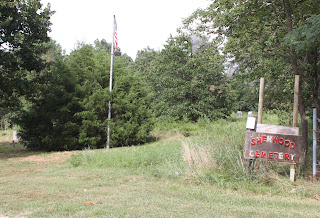
At the time of the Civil War, Sherwood was the third-largest town in Jasper County, Missouri. Located in the extreme western part of the county about three or four miles northwest of present-day Joplin in the northeast quadrant of the intersection of Highway JJ and Fir Road, Sherwood was burned to the ground on May 19, 1863, by Federal soldiers in retaliation for the killing of sixteen of their comrades the previous day during the Skirmish at Rader's Farm three miles to the southeast. The village was targeted, along with a number of other homes in the vicinity, because the western half of the county was known as a hotbed of Southern sentiment. Today, about the only remnant of Sherwood that remains to suggest such a community ever existed is the local cemetery. The entrance to the cemetery is located about a quarter-mile east of JJ Highway on the north side of Fir Road. But the cemetery is noted for another reason, in addition to its Civil War connection. It is the final resting place of Catherine Lincoln Sullenger, a first cousin of President Abraham Lincoln.
Catherine, or Kate as she was often called, was the daughter of Josiah Lincoln, who was a brother to Abe's father, Thomas Lincoln. She was born in Harrison County, Indiana, in 1817. According to later newspaper reports, Kate, as an old woman, enjoyed telling stories relating to her famous cousin's youth, and one or two reports even suggested that the two were childhood playmates. A more than eight-year difference in age casts doubt on this assertion, but the two families were indeed close. Years later, President Lincoln said that he knew Josiah Lincoln very well and that he considered him an excellent and honorable man.
Catherine Lincoln married John Sullenger in Harrison County in 1836, and a few years later, the couple, along with other Sullenger family members, migrated to Missouri and settled in western Jasper County. The Sullengers lived for many years in the Peace Church community, and two of Kate's children, who predeceased her, were buried in the Peace Church Cemetery. However, Kate's husband and two other children, who also predeceased Kate, were buried in the Sherwood Cemetery.
After her husband died in 1898, Kate sold the old homestead and moved into Joplin around the turn of the 20th century. After Kate herself died on March 11, 1908, her body was taken back to Sherwood for burial two days later.
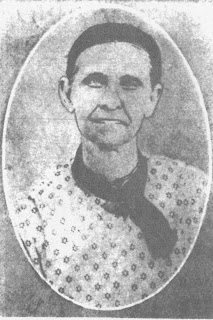
In a story that appeared in a Joplin newspaper near the 50th anniversary of Kate's death, one of her granddaughters claimed that nobody around Joplin even knew about Kate's connection to President Lincoln until after she died. This seems to be an exaggeration, because it was reported at the time of Kate's death that she was a cousin of the former president. However, it does appear to be true that Kate rarely bragged about her connection to President Lincoln or tried to gain advantage because of her famous relative.
Note: most of the information for this blog post is condensed from an article I did on the same subject a few years ago for Journal of the Ozarks.

Catherine, or Kate as she was often called, was the daughter of Josiah Lincoln, who was a brother to Abe's father, Thomas Lincoln. She was born in Harrison County, Indiana, in 1817. According to later newspaper reports, Kate, as an old woman, enjoyed telling stories relating to her famous cousin's youth, and one or two reports even suggested that the two were childhood playmates. A more than eight-year difference in age casts doubt on this assertion, but the two families were indeed close. Years later, President Lincoln said that he knew Josiah Lincoln very well and that he considered him an excellent and honorable man.
Catherine Lincoln married John Sullenger in Harrison County in 1836, and a few years later, the couple, along with other Sullenger family members, migrated to Missouri and settled in western Jasper County. The Sullengers lived for many years in the Peace Church community, and two of Kate's children, who predeceased her, were buried in the Peace Church Cemetery. However, Kate's husband and two other children, who also predeceased Kate, were buried in the Sherwood Cemetery.
After her husband died in 1898, Kate sold the old homestead and moved into Joplin around the turn of the 20th century. After Kate herself died on March 11, 1908, her body was taken back to Sherwood for burial two days later.

In a story that appeared in a Joplin newspaper near the 50th anniversary of Kate's death, one of her granddaughters claimed that nobody around Joplin even knew about Kate's connection to President Lincoln until after she died. This seems to be an exaggeration, because it was reported at the time of Kate's death that she was a cousin of the former president. However, it does appear to be true that Kate rarely bragged about her connection to President Lincoln or tried to gain advantage because of her famous relative.
Note: most of the information for this blog post is condensed from an article I did on the same subject a few years ago for Journal of the Ozarks.
Friday, June 17, 2022
Sleeper, Missouri
When I was growing up, one of my dad's best friends from his youth lived at Sleeper, Missouri, located about seven or eight miles northeast of Lebanon in Laclede County. Our families occasionally visited, and I remember going to Sleeper at least two or three times over the years. My impression of Sleeper at the time was that the name of the place was fitting, because the community, what there was of it, seemed always to be asleep. In truth, Sleeper never amounted to a whole lot, as far as population is concerned, and it still doesn't today.
The first settlers in the vicinity of Sleeper came about 1840, but a community or place known as Sleeper did not come into existence until a few years after the Civil War when the railroad was being extended from Rolla to Springfield. The roadbed was built by contractors who were responsible for small stretches of the road of just one or two miles each. One of the contractors was named Sleeper, and a railroad siding and switching station was built on his section of road with a spur leading to a coal chute. The place at first was called Sleeper's Switch, but the "Switch" part was later dropped. Another, less credible, variation on how Sleeper got its name says that the contractor wasn't actually named Sleeper but that he had a reputation for sleeping or being sleepy a lot and Sleeper or Sleeper's Switch was a derisive name given to the place because of the man's drowsy habits.
A post office was established at Sleeper's Switch in 1879 (one report says 1874), and the post office name was changed to Sleeper in 1883 as a small community continued to grow up around the railroad station. In 1889, the businesses of Sleeper amounted to two general stores and a blacksmith shop. When new coal chutes were built at Sleeper around the turn of the twentieth century, the little town perked up. Town lots were sold, and new residences constructed. In 1907, a Methodist Church moved into Sleeper from an outlying area. The town was incorporated in 1911, and a school district was formed. About 1914, Sleeper got its first telegraph office, and a new train station was built.
By 1920, Sleeper was a thriving little village. It had three mercantile stores, one hardware store, one bank, one lumberyard, two blacksmith shops, two corn mills, one canning factory, a railroad section crew of eight men, and a coal chute crew of eight men.
But that would be the little community's peak, because the coal chutes were removed about this same time (1920), and the town began to decline. A fire destroyed all the businesses on one whole side of the main street in 1930, and the Sleeper bank consolidated with a bank at Stoutland about the same time. In 1932, when a history of Sleeper appeared in the Lebanon Laclede County Republican, Sleeper still had a combined store/post office, a grist mill, a blacksmith shop, a church, a schoolhouse, and a train depot. But even most of those businesses and institutions were destined to disappear over the next twenty years or so. Sleeper lost its post office in 1955, and the Sleeper School was consolidated about the same time. Today, one store, a couple of churches, and a volunteer fire department are about the only going concerns in Sleeper, and a few people still live there.
The first settlers in the vicinity of Sleeper came about 1840, but a community or place known as Sleeper did not come into existence until a few years after the Civil War when the railroad was being extended from Rolla to Springfield. The roadbed was built by contractors who were responsible for small stretches of the road of just one or two miles each. One of the contractors was named Sleeper, and a railroad siding and switching station was built on his section of road with a spur leading to a coal chute. The place at first was called Sleeper's Switch, but the "Switch" part was later dropped. Another, less credible, variation on how Sleeper got its name says that the contractor wasn't actually named Sleeper but that he had a reputation for sleeping or being sleepy a lot and Sleeper or Sleeper's Switch was a derisive name given to the place because of the man's drowsy habits.
A post office was established at Sleeper's Switch in 1879 (one report says 1874), and the post office name was changed to Sleeper in 1883 as a small community continued to grow up around the railroad station. In 1889, the businesses of Sleeper amounted to two general stores and a blacksmith shop. When new coal chutes were built at Sleeper around the turn of the twentieth century, the little town perked up. Town lots were sold, and new residences constructed. In 1907, a Methodist Church moved into Sleeper from an outlying area. The town was incorporated in 1911, and a school district was formed. About 1914, Sleeper got its first telegraph office, and a new train station was built.
By 1920, Sleeper was a thriving little village. It had three mercantile stores, one hardware store, one bank, one lumberyard, two blacksmith shops, two corn mills, one canning factory, a railroad section crew of eight men, and a coal chute crew of eight men.
But that would be the little community's peak, because the coal chutes were removed about this same time (1920), and the town began to decline. A fire destroyed all the businesses on one whole side of the main street in 1930, and the Sleeper bank consolidated with a bank at Stoutland about the same time. In 1932, when a history of Sleeper appeared in the Lebanon Laclede County Republican, Sleeper still had a combined store/post office, a grist mill, a blacksmith shop, a church, a schoolhouse, and a train depot. But even most of those businesses and institutions were destined to disappear over the next twenty years or so. Sleeper lost its post office in 1955, and the Sleeper School was consolidated about the same time. Today, one store, a couple of churches, and a volunteer fire department are about the only going concerns in Sleeper, and a few people still live there.
Sunday, June 12, 2022
The "Scandalous" Story of Effie Ellis
Back in the prim and proper Victorian Age, it didn't take much to create a scandal. More specifically, it didn't take much for a woman to be labeled an immoral floozy. Effie Ellis's story, which made headlines in Missouri newspapers in the late 1880s, is a case in point.
Isabelle "Belle" O'Dowd, was about 17 or 18 years of age when, using the stage name Effie Ellis, she came to Springfield at Christmastime of 1886 as an actress and a song and dance girl for a traveling variety show out of St. Louis. Fenton Cox, son of G. M. Cox, a prominent Springfield physician, became infatuated with the beautiful and charming young woman, and she seemed to return his affection to some degree. She lingered in Springfield, and young Cox tried to set her up with a variety show of her own in Springfield. Alarmed by his son's infatuation with a person he considered to be a loose woman and little better than a "demon harlot," Dr. Cox tried to break the couple up. He thought Effie was only spending time with Fenton so he would support her financially, and he finally succeeded, with the help of the local police, in running Effie out of town.
 from St. Louis Globe Democrat
However, Fenton followed the girl to cities throughout the Midwest, including St. Louis, Memphis, Kansas City, and Topeka. Dr. Cox made several trips to bring his son home, and he even set him up with a couple of different jobs, one in New York, to try to keep him away from Effie. But Fenton and Effie kept writing letters to each other and seeing each other on the sly. The couple even passed themselves off as man and wife in St. Louis during early 1888, but they did not live together. Dr. Cox traveled to St. Louis to bring Fenton home once again, but the young man swore he was in love with Belle (i.e. Effie) and wanted to marry her for real. Dr. Cox vehemently opposed such a union, but he was at his wit's end as to how to break the couple up. He finally decided to resort to desperate means. Using Fenton's name, Dr. Cox wired Effie in St. Louis beseeching her to come to Springfield.
Effie balked at making the trip and even expressed to a female friend of hers that she feared something bad might happen if she went to Springfield. The friend later said that Effie seemed more afraid of Fenton because of his insane jealousy than she was in love with him. The telegrams kept coming, though, imploring her to come to Springfield, and she finally relented.
She arrived at the Frisco depot in North Springfield on the morning of March 14, 1888, expecting Fenton to meet her there. Instead, Dr. Cox was there to pick her up. She boarded his carriage, and they started off together, being driven by a hackman. They had gone just a short distance when Dr. Cox began verbally abusing the young woman. Next, he grabbed her by the throat and began beating her. She begged him not to kill her, and he said he wouldn't kill her but he might do something worse. He then pulled out a bottle of carbolic acid and threw its contents in her face.
Effie was taken to a Springfield hotel, where she received medical treatment. It was feared she had been blinded by the acid and left permanently disfigured. A day or so later, though, doctors announced that she would not lose her sight in both eyes and maybe not in either. Her face would be scarred, they said, but not severely so.
Meanwhile, Dr. Cox was arrested on charges of felonious assault. At first, there was considerable talk of mob action against him, but when it was learned that Effie would not die and might make an almost complete recovery, such talk died down. Dr. Cox gave bond and was allowed to go free.
Newspapers, while generally deploring Cox's desperate measure, seemed to sympathize with him and tended to cast blame on the victim, calling her such names as a "soiled dove," and a "fallen angel" and accusing her of being "oblivious to the seventh commandment," despite the fact that no proof was presented to suggest she was promiscuous. The most damning evidence against her seemed to be that she was associated with a "low" variety show. One newspaper did admit that, although Cox was generally respected in the community, some people didn't like him because of his quick temper.
To the contrary of the way Effie was generally portrayed in the press, the best evidence suggests that she was not a prostitute or a promiscuous woman. Effie had been orphaned about five years earlier when her mother died, and she had to support herself. The woman who knew her in St. Louis (the theater manager's wife) said that Effie did not seem to especially enjoy the theatrical life and only stayed with it because it was the only way she knew to make a living. Despite her apparent lack of enthusiasm for her job, Effie discharged all of her duties satisfactorily. The woman also said Effie did not seem to particularly care for male company. In addition, Effie's landlady said the young woman mainly kept to herself in her room and was "very circumspect" in her behavior.
On March 17, three days after his attack on Effie, Dr. Cox was driving a buggy on the Springfield square "at a brisk speed" when the shaft of the buggy struck a man who was carrying a basket of fish and knocked him down, bruising him in several places. The man filed charges against the doctor, and he was arrested for criminal negligence. Taken before a judge, he gave bond on the new charge and was again released. The doctor claimed his mind was so preoccupied with his troubles with his son that he didn't see the pedestrian.
Later the same day, Fenton and Effie, who was on the road to recovery, met with Dr. Cox in his office with the doctor who had treated Effie acting as an intermediary. Cox told his son to choose between the support of his family or the girl, and Fenton said without hesitation that he chose the girl. Dr. Cox said that settled the matter and peremptorily dismissed the couple.
Effie had recuperated enough that she was able to travel, and it was thought she would not be disfigured or blinded after all. She and Fenton made plans to leave for St. Louis. From there, they planned to cross the Mississippi River to Illinois and get married. However, a prosecutor informed them that they needed to stay around so they could testify at Dr. Cox's preliminary hearing, and they delayed their departure.
Later that afternoon, a reporter interviewed Effie and Fenton at her hotel room. Effie said it wasn't true that she was attracted to Fenton only because of his father's money and that she loved him "for his own self." She pointed out that, while it was true Fenton had furnished her money on occasion, she had also given him money from her scant savings a few times when he was short on funds, and the young man confirmed that the statement was true. Effie said she had no desire that Dr. Cox should be punished for his attack on her, even though he had "dogged and hounded" her relentlessly for the past year and had even knocked her down one time in Memphis. Effie said that, from what she knew of Fenton's mother and sister, she had the kindest regard for them.
At his preliminary hearing on March 20, Dr. Cox waived examination and gave bond to appear at trial. The speculation was, however, that the case would never be prosecuted because Effie would not appear to testify against him, and Fenton seemed to confirm that such was the case.
On March 22, Effie and Fenton traveled to St. Louis as planned, but when they called at the probate judge's office for a marriage license, Fenton learned his father had already contacted the judge and told him not to issue the license since the boy was not of legal age to get married. This was not true, and Fenton hotly denied it, but the marriage was nevertheless postponed. Although Effie had said she did not want to see Dr. Cox punished for his attack on her, she promptly retained a lawyer when she reached St. Louis with plans to sue the doctor for damages. Dr. Cox tried unsuccessfully about this time to get his son committed to an insane asylum.
When Dr. Cox's criminal case came before a grand jury in Springfield in the early summer of 1888, the jury declined to indict him. Near the end of the year, a different jury did indict Cox for the assault on Effie, but she could not be located to return to Springfield and testify. The case was not further prosecuted.
Dr. Cox died in June of 1889. Later that year, Fenton and Effie attended a theater performance in St. Louis, and the next morning a man who had shared the same theater box with them filed a complaint of larceny against Fenton for allegedly taking off with the man's coat and watch after the man fell asleep. Fenton denied the charge at first but finally broke down and confessed, claiming he only did it because he was drunk at the time. He also claimed Effie, whom the St. Louis Globe Democrat called a "disreputable woman," had no knowledge of the theft. One report near this time said that Fenton and Effie were now married, but this was apparently not true.
Effie and Fenton traveled together for a time in a variety show, spending a lengthy sojourn in Peoria, Illinois, but now that Dr. Cox was no longer around to try to keep the couple separated, Fenton's infatuation with the girl gradually waned and they went their separate ways. Effie continued her association with the theater a while longer, but then she married a plumber named Lauer and they moved to Kansas City and stayed a few months before moving back to St. Louis. Meanwhile, Fenton's separation from Effie did not put him on the straight and narrow path, because in 1891, he once again got into trouble for stealing but this time it was highway robbery. He and two sidekicks held up a traveler and robbed him of a $200 watch and some money. Young Cox was unable to give bond and remained locked up several days after the crime. Fent, as he was often called, got into a couple of more scrapes with the law over the next year before finally being convicted in Jasper County for a burglary at Sarcoxie and being sent up the river to Jeff City for two-plus-year stint in the state prison.
In 1897, Lauer sued Effie for divorce in St. Louis and asked for custody of their 5-year-old daughter, claiming that Effie had deserted him and gone to live with another man. Effie, or Isabella Lauer as she was now known, counter-sued. In her cross bill, Effie said Lauer knew what manner of woman she was and knew that she had been living with Fenton Cox without the benefit of matrimony when Lauer married her. Presumably the implication was that Lauer should not now be able to use her questionable reputation against her. In addition, Effie said that Lauer was abusive and often beat her. They had a son together that was born in Memphis, but Lauer took the boy from her in New Orleans and left him on the steps of a church. The reason she "deserted" Lauer, she said, was because he gave her a hard beating, then gave her three dollars, and ordered her to leave and do the best she could on her own. Effie asked for custody of the five-year-old girl.
Lauer was finally granted a divorce in 1898 and was given custody of the daughter. And that was the last that was ever heard of Effie Ellis (aka Isabella Lauer).
Isabelle "Belle" O'Dowd, was about 17 or 18 years of age when, using the stage name Effie Ellis, she came to Springfield at Christmastime of 1886 as an actress and a song and dance girl for a traveling variety show out of St. Louis. Fenton Cox, son of G. M. Cox, a prominent Springfield physician, became infatuated with the beautiful and charming young woman, and she seemed to return his affection to some degree. She lingered in Springfield, and young Cox tried to set her up with a variety show of her own in Springfield. Alarmed by his son's infatuation with a person he considered to be a loose woman and little better than a "demon harlot," Dr. Cox tried to break the couple up. He thought Effie was only spending time with Fenton so he would support her financially, and he finally succeeded, with the help of the local police, in running Effie out of town.

However, Fenton followed the girl to cities throughout the Midwest, including St. Louis, Memphis, Kansas City, and Topeka. Dr. Cox made several trips to bring his son home, and he even set him up with a couple of different jobs, one in New York, to try to keep him away from Effie. But Fenton and Effie kept writing letters to each other and seeing each other on the sly. The couple even passed themselves off as man and wife in St. Louis during early 1888, but they did not live together. Dr. Cox traveled to St. Louis to bring Fenton home once again, but the young man swore he was in love with Belle (i.e. Effie) and wanted to marry her for real. Dr. Cox vehemently opposed such a union, but he was at his wit's end as to how to break the couple up. He finally decided to resort to desperate means. Using Fenton's name, Dr. Cox wired Effie in St. Louis beseeching her to come to Springfield.
Effie balked at making the trip and even expressed to a female friend of hers that she feared something bad might happen if she went to Springfield. The friend later said that Effie seemed more afraid of Fenton because of his insane jealousy than she was in love with him. The telegrams kept coming, though, imploring her to come to Springfield, and she finally relented.
She arrived at the Frisco depot in North Springfield on the morning of March 14, 1888, expecting Fenton to meet her there. Instead, Dr. Cox was there to pick her up. She boarded his carriage, and they started off together, being driven by a hackman. They had gone just a short distance when Dr. Cox began verbally abusing the young woman. Next, he grabbed her by the throat and began beating her. She begged him not to kill her, and he said he wouldn't kill her but he might do something worse. He then pulled out a bottle of carbolic acid and threw its contents in her face.
Effie was taken to a Springfield hotel, where she received medical treatment. It was feared she had been blinded by the acid and left permanently disfigured. A day or so later, though, doctors announced that she would not lose her sight in both eyes and maybe not in either. Her face would be scarred, they said, but not severely so.
Meanwhile, Dr. Cox was arrested on charges of felonious assault. At first, there was considerable talk of mob action against him, but when it was learned that Effie would not die and might make an almost complete recovery, such talk died down. Dr. Cox gave bond and was allowed to go free.
Newspapers, while generally deploring Cox's desperate measure, seemed to sympathize with him and tended to cast blame on the victim, calling her such names as a "soiled dove," and a "fallen angel" and accusing her of being "oblivious to the seventh commandment," despite the fact that no proof was presented to suggest she was promiscuous. The most damning evidence against her seemed to be that she was associated with a "low" variety show. One newspaper did admit that, although Cox was generally respected in the community, some people didn't like him because of his quick temper.
To the contrary of the way Effie was generally portrayed in the press, the best evidence suggests that she was not a prostitute or a promiscuous woman. Effie had been orphaned about five years earlier when her mother died, and she had to support herself. The woman who knew her in St. Louis (the theater manager's wife) said that Effie did not seem to especially enjoy the theatrical life and only stayed with it because it was the only way she knew to make a living. Despite her apparent lack of enthusiasm for her job, Effie discharged all of her duties satisfactorily. The woman also said Effie did not seem to particularly care for male company. In addition, Effie's landlady said the young woman mainly kept to herself in her room and was "very circumspect" in her behavior.
On March 17, three days after his attack on Effie, Dr. Cox was driving a buggy on the Springfield square "at a brisk speed" when the shaft of the buggy struck a man who was carrying a basket of fish and knocked him down, bruising him in several places. The man filed charges against the doctor, and he was arrested for criminal negligence. Taken before a judge, he gave bond on the new charge and was again released. The doctor claimed his mind was so preoccupied with his troubles with his son that he didn't see the pedestrian.
Later the same day, Fenton and Effie, who was on the road to recovery, met with Dr. Cox in his office with the doctor who had treated Effie acting as an intermediary. Cox told his son to choose between the support of his family or the girl, and Fenton said without hesitation that he chose the girl. Dr. Cox said that settled the matter and peremptorily dismissed the couple.
Effie had recuperated enough that she was able to travel, and it was thought she would not be disfigured or blinded after all. She and Fenton made plans to leave for St. Louis. From there, they planned to cross the Mississippi River to Illinois and get married. However, a prosecutor informed them that they needed to stay around so they could testify at Dr. Cox's preliminary hearing, and they delayed their departure.
Later that afternoon, a reporter interviewed Effie and Fenton at her hotel room. Effie said it wasn't true that she was attracted to Fenton only because of his father's money and that she loved him "for his own self." She pointed out that, while it was true Fenton had furnished her money on occasion, she had also given him money from her scant savings a few times when he was short on funds, and the young man confirmed that the statement was true. Effie said she had no desire that Dr. Cox should be punished for his attack on her, even though he had "dogged and hounded" her relentlessly for the past year and had even knocked her down one time in Memphis. Effie said that, from what she knew of Fenton's mother and sister, she had the kindest regard for them.
At his preliminary hearing on March 20, Dr. Cox waived examination and gave bond to appear at trial. The speculation was, however, that the case would never be prosecuted because Effie would not appear to testify against him, and Fenton seemed to confirm that such was the case.
On March 22, Effie and Fenton traveled to St. Louis as planned, but when they called at the probate judge's office for a marriage license, Fenton learned his father had already contacted the judge and told him not to issue the license since the boy was not of legal age to get married. This was not true, and Fenton hotly denied it, but the marriage was nevertheless postponed. Although Effie had said she did not want to see Dr. Cox punished for his attack on her, she promptly retained a lawyer when she reached St. Louis with plans to sue the doctor for damages. Dr. Cox tried unsuccessfully about this time to get his son committed to an insane asylum.
When Dr. Cox's criminal case came before a grand jury in Springfield in the early summer of 1888, the jury declined to indict him. Near the end of the year, a different jury did indict Cox for the assault on Effie, but she could not be located to return to Springfield and testify. The case was not further prosecuted.
Dr. Cox died in June of 1889. Later that year, Fenton and Effie attended a theater performance in St. Louis, and the next morning a man who had shared the same theater box with them filed a complaint of larceny against Fenton for allegedly taking off with the man's coat and watch after the man fell asleep. Fenton denied the charge at first but finally broke down and confessed, claiming he only did it because he was drunk at the time. He also claimed Effie, whom the St. Louis Globe Democrat called a "disreputable woman," had no knowledge of the theft. One report near this time said that Fenton and Effie were now married, but this was apparently not true.
Effie and Fenton traveled together for a time in a variety show, spending a lengthy sojourn in Peoria, Illinois, but now that Dr. Cox was no longer around to try to keep the couple separated, Fenton's infatuation with the girl gradually waned and they went their separate ways. Effie continued her association with the theater a while longer, but then she married a plumber named Lauer and they moved to Kansas City and stayed a few months before moving back to St. Louis. Meanwhile, Fenton's separation from Effie did not put him on the straight and narrow path, because in 1891, he once again got into trouble for stealing but this time it was highway robbery. He and two sidekicks held up a traveler and robbed him of a $200 watch and some money. Young Cox was unable to give bond and remained locked up several days after the crime. Fent, as he was often called, got into a couple of more scrapes with the law over the next year before finally being convicted in Jasper County for a burglary at Sarcoxie and being sent up the river to Jeff City for two-plus-year stint in the state prison.
In 1897, Lauer sued Effie for divorce in St. Louis and asked for custody of their 5-year-old daughter, claiming that Effie had deserted him and gone to live with another man. Effie, or Isabella Lauer as she was now known, counter-sued. In her cross bill, Effie said Lauer knew what manner of woman she was and knew that she had been living with Fenton Cox without the benefit of matrimony when Lauer married her. Presumably the implication was that Lauer should not now be able to use her questionable reputation against her. In addition, Effie said that Lauer was abusive and often beat her. They had a son together that was born in Memphis, but Lauer took the boy from her in New Orleans and left him on the steps of a church. The reason she "deserted" Lauer, she said, was because he gave her a hard beating, then gave her three dollars, and ordered her to leave and do the best she could on her own. Effie asked for custody of the five-year-old girl.
Lauer was finally granted a divorce in 1898 and was given custody of the daughter. And that was the last that was ever heard of Effie Ellis (aka Isabella Lauer).
Subscribe to:
Posts (Atom)